


%20(7).png)
The latest data from the Arts & Culture Benchmark points to a sector that has made real progress since the pandemic, but where some of the drivers of growth are beginning to soften.
The analysis draws on 40 U.S. orchestras with consistent data from July 2021 through June 2026, looking across single tickets, subscriptions and memberships, individual giving, and audience demographics. Revenue figures are adjusted for inflation, allowing for a clearer view of real growth over time.
Watch back the September 16 benchmark webinar below, co-hosted by TRG Arts and the League of American Orchestras, for a deeper dive into the latest trends and what they mean for orchestras.
1. Single-ticket growth is losing momentum
Compared with 2022-23, orchestras are still selling more single tickets and generating more revenue. Inflation-adjusted single-ticket revenue is up 11%. But 2025-26 marked a step backward after two years of growth, with both ticket volume and revenue at their lowest levels since 2022-23.
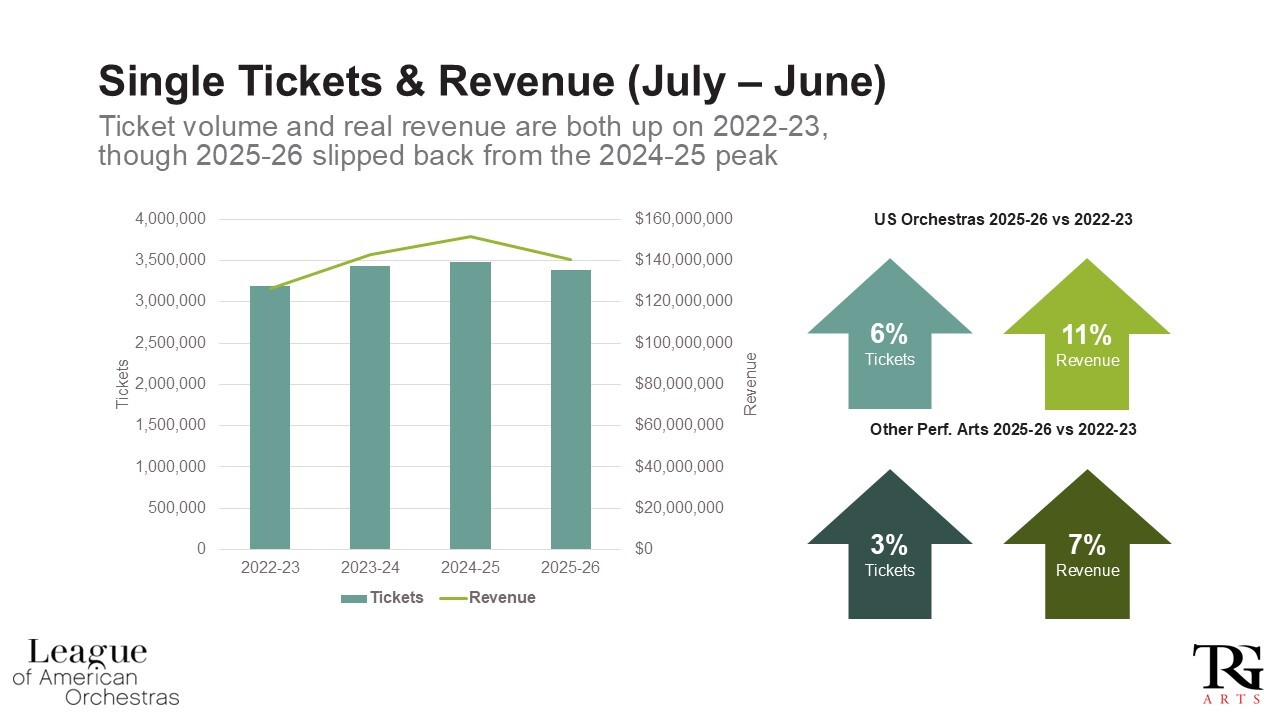
Look underneath the headline numbers and the challenge becomes clearer. There are fewer households buying, average order size has fallen over the longer term, and frequency has also declined. Even relatively small changes matter: had 2025-26 buyers maintained the average order size seen in 2022-23, the sector would have recorded its highest single-ticket volume of the period.
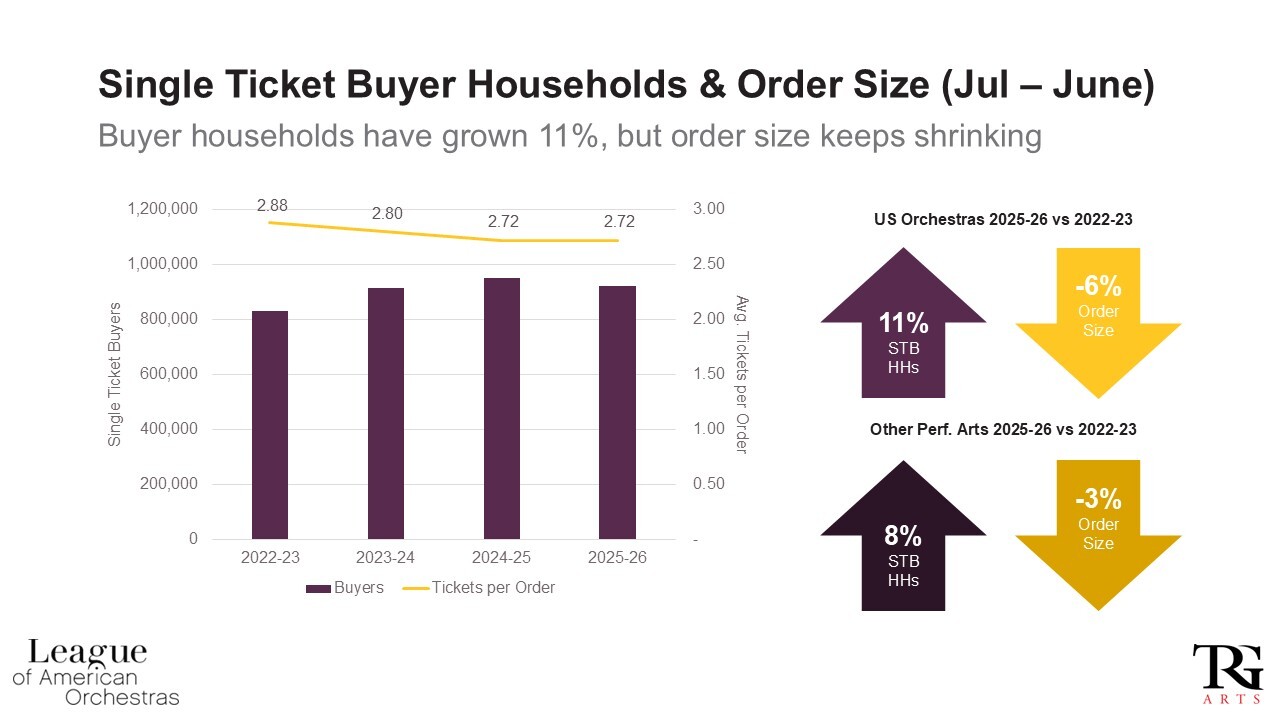
The implication? Growth cannot depend solely on finding more people. Increasing frequency and strengthening the relationships organizations already have can be just as important.
2. Subscription renewal looks resilient. Acquisition is the bigger question.
The early months of subscription and membership campaigns have remained remarkably consistent. Around 63% of subscriber and member households in the most recently completed season purchased between February and June, a period typically dominated by renewals.
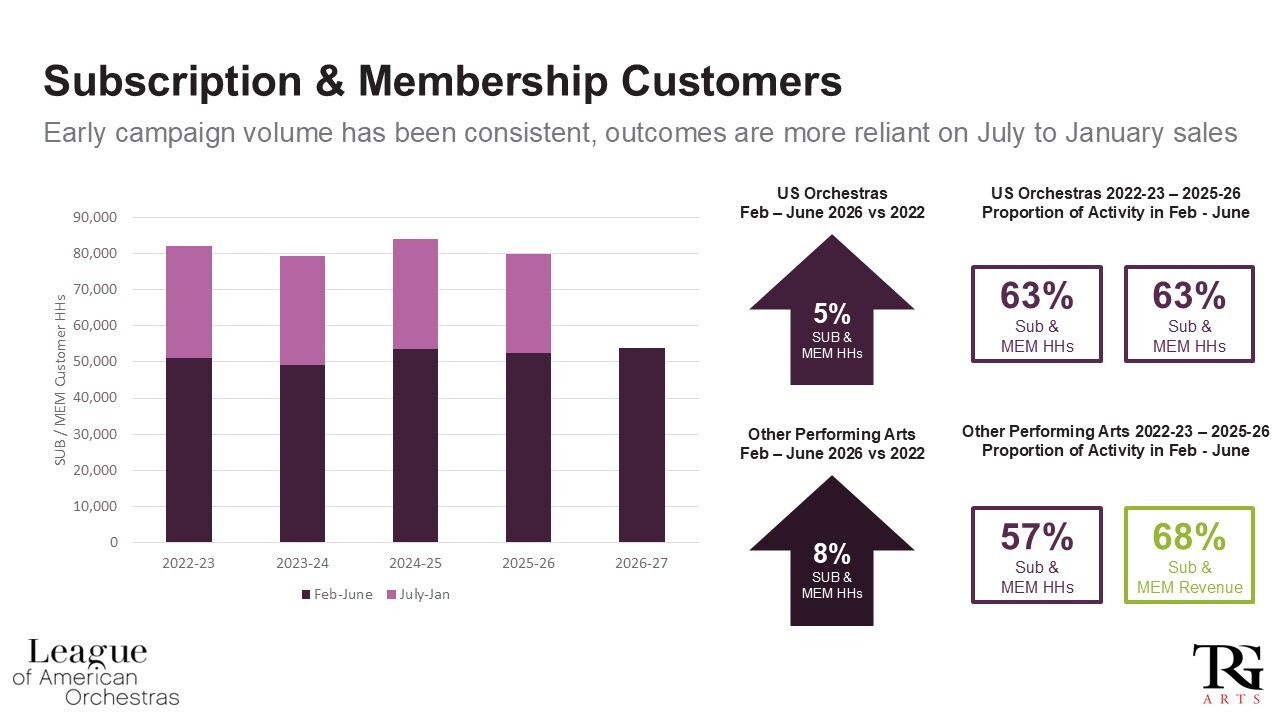
The greater variation comes later, when acquisition becomes increasingly important.
That matters because substantial subscription growth requires more than strong renewal. Orchestras need to keep adding new subscribers and members, and the pipeline for those relationships begins with single-ticket buyers. A shrinking or less-frequent single-ticket audience therefore has consequences beyond this season's ticket revenue.
3. More people are giving, but they are giving less
Individual giving offers another mixed picture. The number of gifts has grown by around 11% over the study period, with donor households growing too. But inflation-adjusted revenue declined in 2025-26, while average gift size fell 10% over the period.
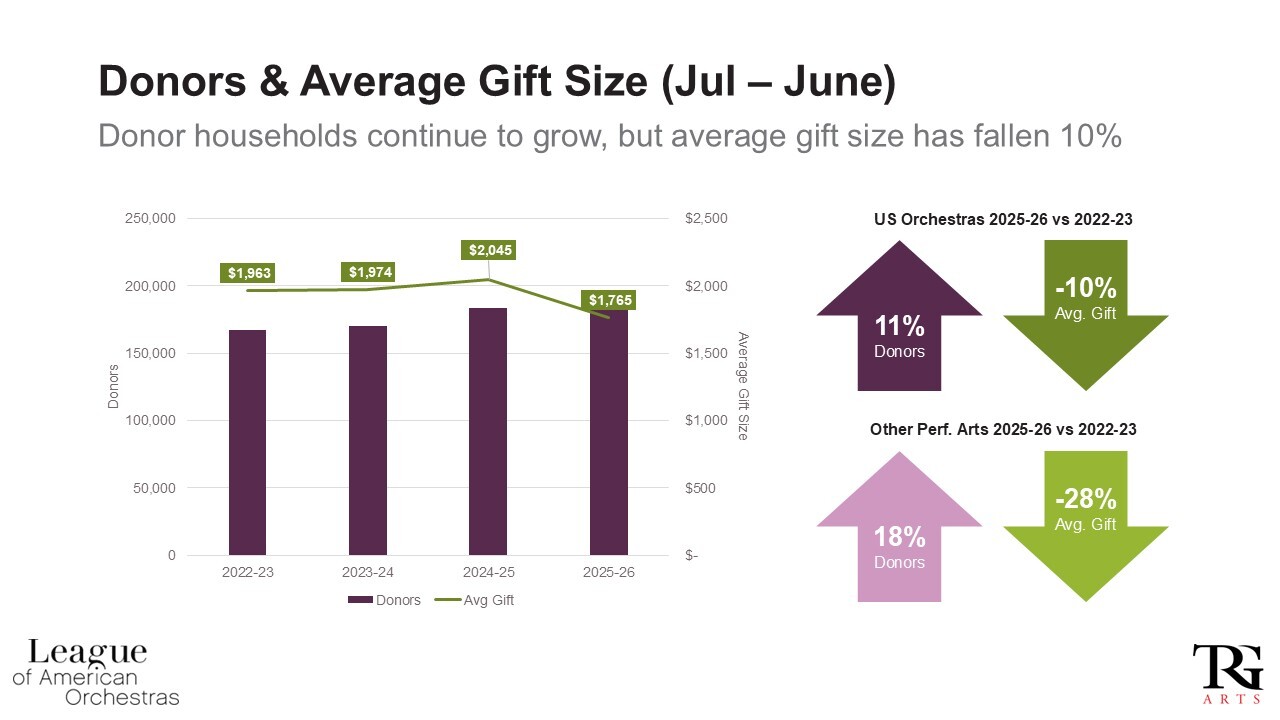
In other words, orchestras are successfully building more philanthropic relationships, but it is taking more of those relationships to generate the same revenue.
That puts increased importance on understanding giving behavior: not simply how many donors an organization has, but how those relationships deepen, how often people give, and how average gift value changes over time.
4. The orchestra audience may be younger than we think
Perhaps the most encouraging finding is demographic.
Gen X and Millennials together now represent a majority of active households, while Gen Z and Millennials are the fastest-growing generational cohorts. Nearly two-thirds of active households in the benchmark are under 60.
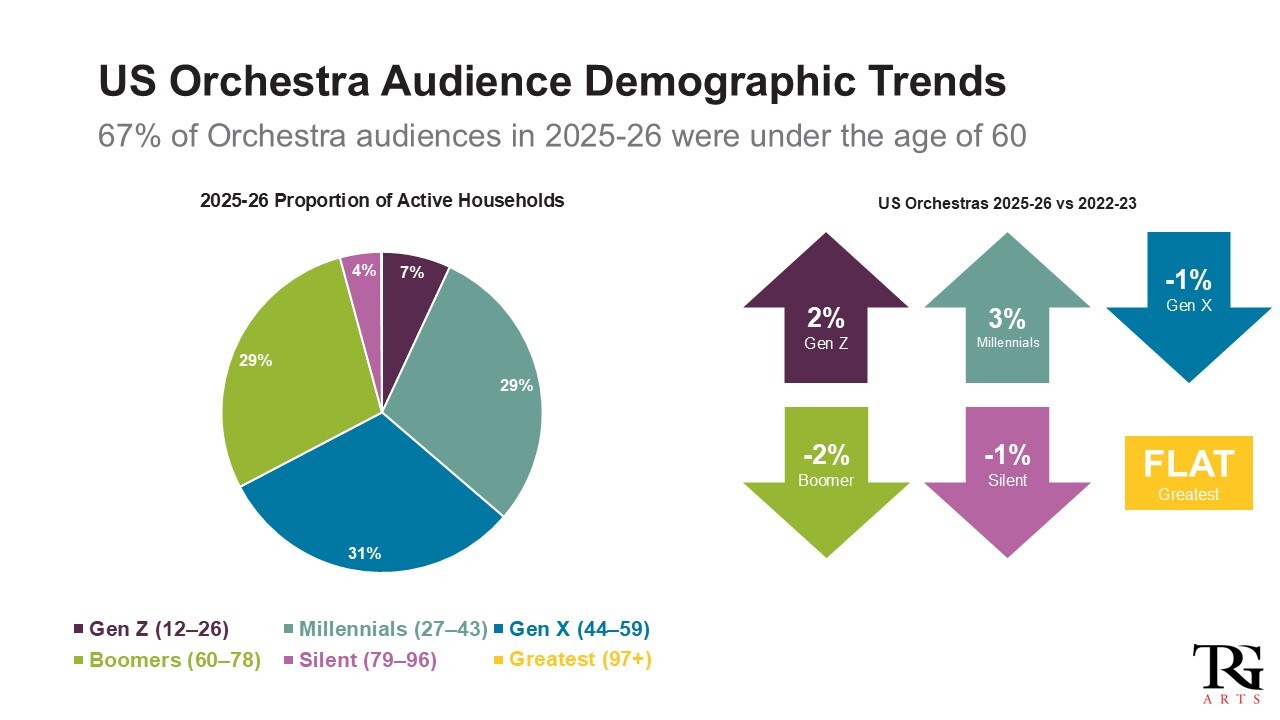
That challenges some persistent assumptions about who orchestra audiences are. It also creates an important distinction: the people organizations see most frequently, particularly long-standing subscribers, may not represent the full audience.
The bigger picture: relationships matter
Across tickets, subscriptions, and giving, the common thread is not simply how many transactions organizations generate. It is the behavior of the people behind them.
How many come back? How frequently? How many tickets do they buy? Does a single-ticket buyer become a subscriber? Does a ticket buyer become a donor?
With marketing teams and budgets under pressure, continually replacing audiences is an expensive route to growth. The latest benchmark suggests that the opportunity is as much about strengthening existing relationships as acquiring new ones: increasing frequency, developing loyalty, and creating a stronger pipeline from first purchase to deeper engagement.
What is your data saying about the seasons ahead?
The Arts & Culture Benchmark shows the value of looking beyond headline revenue and ticket sales. Changes in frequency, order size, retention, acquisition, and giving can reveal where your biggest opportunities, and pressures, may be.
What is your data telling you to prioritize next? Talk with TRG about what you're seeing, where the opportunities lie, and where to focus for the seasons ahead.
