


%20(39).png)
When sales slow, most teams reach for a discount. It feels fast. It feels visible. It feels like action. But as I explored in our recent Deeper Dive Webinar, these sorts of discounts can quietly shape audience behavior in ways that erode long-term revenue and loyalty .
The core idea is simple: Demand should inform price, not the other way around. Watch back the webinar below, or scroll down for my key takeaways.
1. Discounts Train Behavior
When sales slow, discounting feels like action. But repeated, late discounts teach your audience to wait. If your lowest price seats are still available for your low demand performances, price is often not the root issue. Demand is.
If you rely on discounts to fix weak sales, you weaken future pricing power.
Ask yourself:
If every ticket were free, would you have a full house every night?
If the answer is no, then lowering price probably won’t fix the underlying issue. Discounting has a role. But it should support a strategy, not replace one.
2. Demand is Built Early
Most of the work in building demand happens long before opening night. Early pace gives you options, late panic tends to take them away.
When you manage demand early, you gain control over:
- How the room feels: If seats sell early and fill evenly in the right areas, your house looks active and in demand. People walk in and feel they made a good decision to attend.
- Which seats are available and when: You decide what goes on sale and what stays held back. This helps you guide where people sit and how the room fills over time.
- How much you earn per seat: As more seats sell, your average ticket price should increase. Revenue per ticket should rise as demand rises.
- How you reward your loyal buyers: Active demand management allows you to offer strong seats and fair pricing to subscribers and repeat buyers. They feel valued for committing early, not punished for it.
When you wait until the final weeks to react, your only lever left is price. So look at your booking curve. Where does momentum build? And where does it stall? How can you purposefully shape it?
3. Perception of Success Shapes Behavior
People notice the room. They notice the seat map. They notice empty sections and scattered seating. This perception affects energy, atmosphere and how folks feel when they attend your venue.
A well-structured scale of house isn't a cosmetic decision because it influences energy, confidence and repeat attendance.
Review your seat map for low-, mid- and high-demand performances to see whether the most visible areas fill first and whether the zoning of your prices and price bands help shape whether your house feels full or not.
Look at your current scale plan:
-
Are your highest prices aligned with where demand naturally concentrates?
-
Are lower price bands positioned to help fill visible areas, not hide in the back corners?
-
Does your structure support both access and yield, for both low and high demand performances?
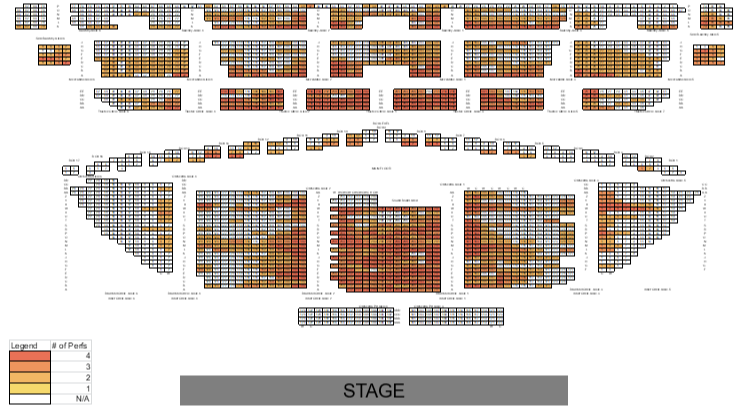
In this example, you can see the difference a data-led scale plan and disciplined inventory management make.
In this first image, seating is scattered. There are visible gaps. Entire rows sit partially empty. Patrons are surrounded by unsold seats. The room feels less active, even if overall attendance is similar.
In this second image, buyers are clustered more intentionally. Visible areas fill first. Fewer empty rows sit directly in front of occupied seats. The density creates a stronger atmosphere.
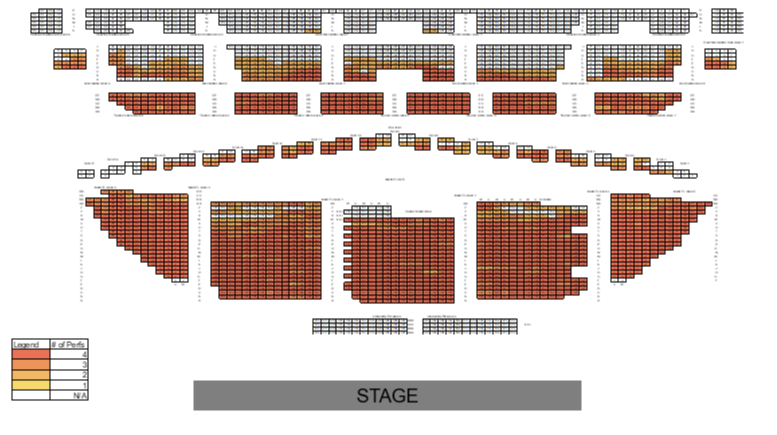
Through data led rescaling, price zones were repositioned to align with actual buying behavior. Entry pricing supported visible fill. Premium areas were protected. Inventory entered the market in phases instead of all at once.
4. Revenue Per Seat Should Rise With Demand.
Track your average paid ticket price across the full sales cycle.
Does revenue per seat increase as availability tightens? Or does it drop at the end because only lower price seats remain or discounts are introduced?
In the webinar example, all price points are available at on sale, so access exists at every level from day one. But inventory is phased. Initial availability covers low demand scenarios based on past sales. As demand strengthens, seats are released in stages, with fewer lower priced seats available at each step to reflect higher demand later in the cycle.
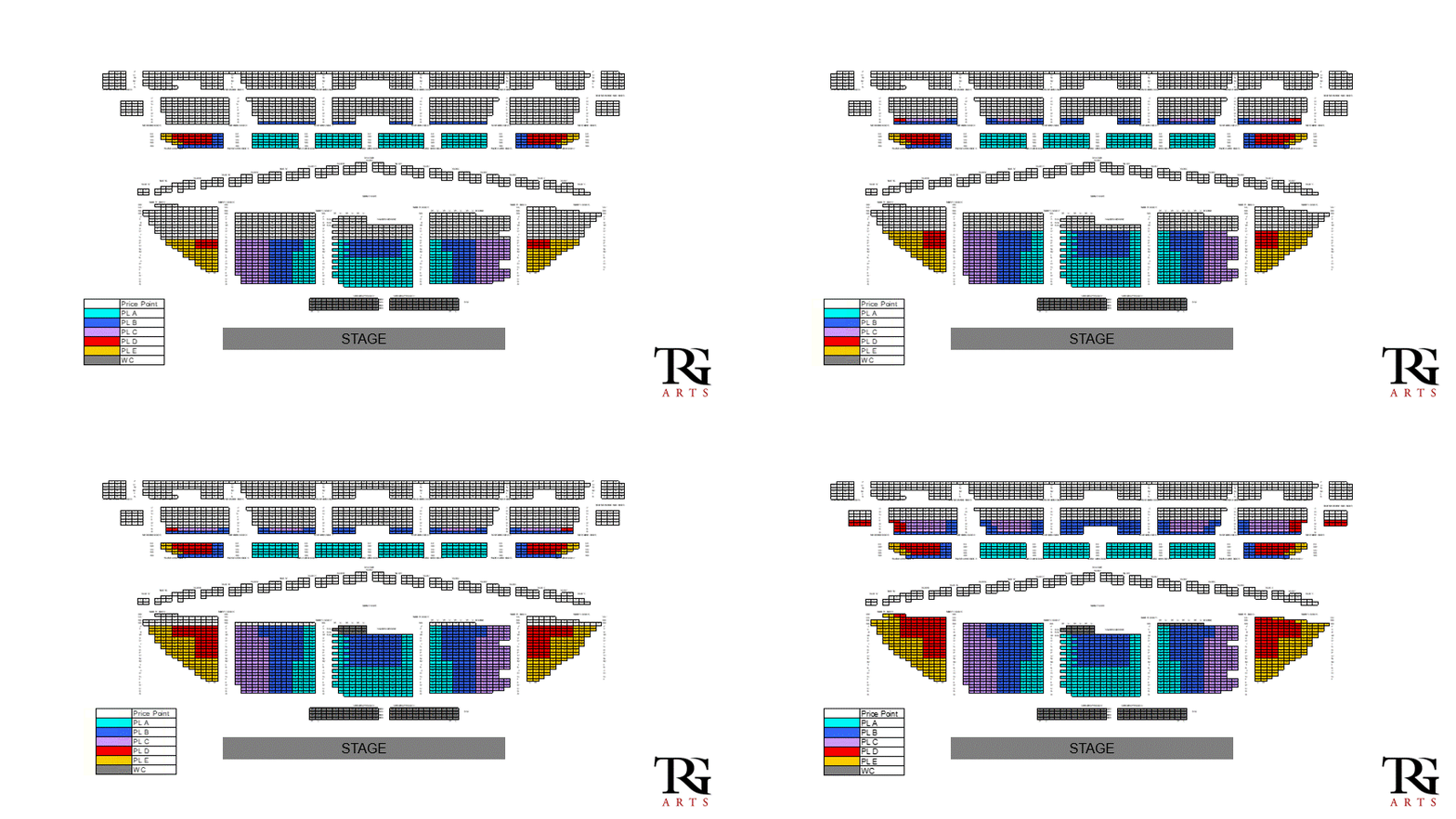
The result is simple. Early entry pricing supports perception of success and fills visible areas. As sections sell and availability tightens, average ticket price rises. Revenue per seat increases on stronger performances because structure supports it, not because of last minute price cuts.
A Challenge for Your Next On-Sale
If you are planning your next season, examine one low demand performance and one high demand performance side by side.
-
Where did people sit?
-
Which price bands sold first?
-
When did revenue per seat peak?
-
When did discounting begin?
Book a Free Pricing Surgery
If this conversation raised questions about your own pricing, scale plan, or inventory flow, the next step is simple: Book a complimentary Pricing Surgery.
In one focused session, we will review your data, examine one low demand and one high demand performance, and assess how your current structure shapes perception, yield, and loyalty. You'll leave with clear, practical next steps.
