


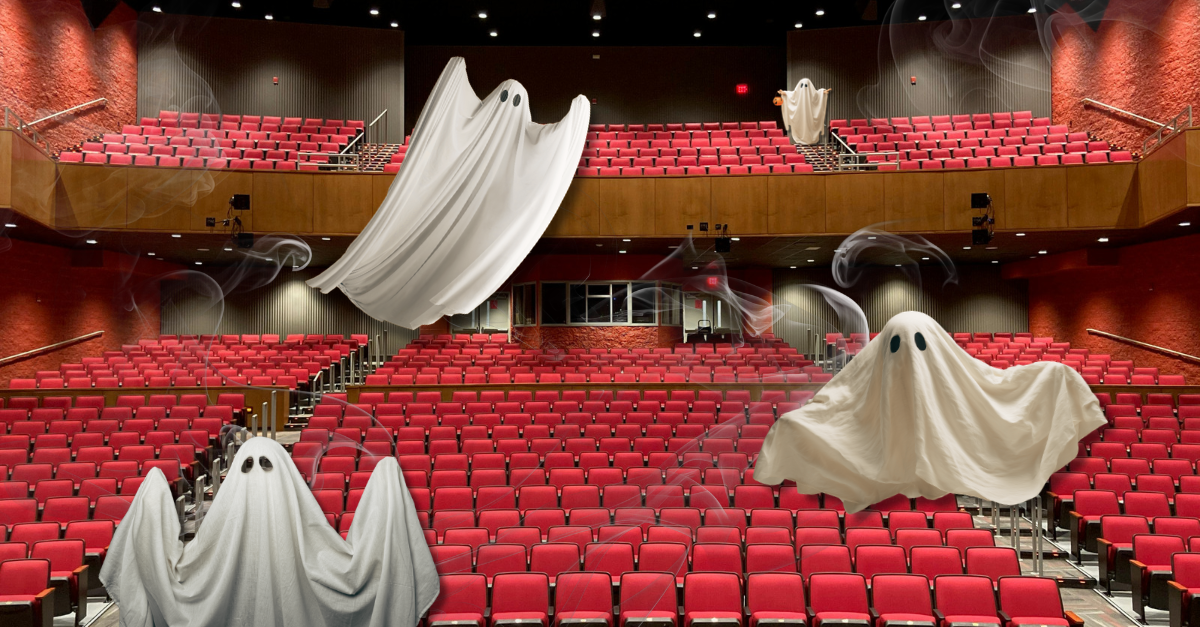
Empty seats, disappearing revenue, and pricing decisions that keep coming back to haunt you. Could your scale plan be working against you?
Every theater has a few ghosts of pricing decisions past.
Perhaps it's the seating chart that's barely changed in years. The price bands inherited from a previous season. Or the premium seats that always sell out first, while other sections remain stubbornly empty.
Your scale plan determines more than how much a patron pays for a particular seat. It influences purchasing decisions, shapes perceptions of value, and affects how much revenue you can generate from every performance.
Yet it's easy to carry the same scale plan from season to season without questioning whether it still reflects how audiences actually buy.
So, this Halloween, let's shine a light on six signs your scale plan might need a closer look.
Ghost #1: Your best seats keep disappearing
If your most popular seats consistently sell out early, that might seem like good news. But it could also suggest they're underpriced relative to demand.
When patrons are willing to pay more for particular locations, selling those seats too cheaply can mean leaving revenue on the table.
That doesn't mean every popular seat needs a higher price. But it does mean understanding which seats sell first, how quickly they sell, and whether your pricing reflects their relative value.
Ask yourself: Which seats consistently sell first, and are we pricing them in line with what demand tells us?
Ghost #2: The empty seats that never go away
Every venue has areas that are harder to sell. Perhaps they're further from the stage, have restricted views, or simply aren't perceived as offering the same value as nearby seats.
But if those areas consistently remain empty, the problem may not be a lack of overall demand.
It could be that your price differences don't adequately reflect how patrons value different seating locations.
A thoughtful scale plan should offer meaningful choices across the house, with price points that reflect the experience each seat provides.
Ask yourself: Are our lower-demand seats priced attractively enough relative to other options, or are we expecting patrons to pay too much for locations they consistently avoid?
Ghost #3: The ghost of scale plans past
When was the last time you fundamentally reviewed your scale plan?
It's easy to carry forward last season's seating configuration, make a few adjustments, and assume the underlying structure still works.
But audience behaviors change. Demand varies by production, day of the week, and time of year. A seating plan that worked three seasons ago, might not work now.
Rather than treating your scale plan as fixed, consider how the configuration of your scale plan might benefit all levels of demand, not just your sell-outs.
Ask yourself: Are we designing our scale plans around current audience behavior, or simply repeating decisions made years ago?
Ghost #4: The half-empty house that feels even emptier
A performance shouldn't need to sell out to feel successful. But when audiences are scattered across a half-empty auditorium, the experience can feel very different from one where patrons are seated closer together.
Releasing every seat at the start of the sales cycle isn't always the best approach, particularly for lower-demand performances.
Strategic inventory management allows you to control which seats are available, encouraging audiences to fill the house from front to back and side to side. That can create a better atmosphere for patrons and performers alike, without needing to sell more tickets.
Ask yourself: Are we managing which seats are available to create the best possible audience experience, or simply opening the entire house and hoping it fills?
Ghost #5: The mysterious case of disappearing yield
An increase in ticket sales doesn't always mean an increase in your average ticket price/yield.
If your most desirable seats sell early at relatively low prices, you may be giving away opportunities to increase your average ticket yield as demand builds.
A well-designed scale plan considers not just how much each seat costs, but the order in which different price points are likely to sell. Ideally, your average ticket yield should grow as a performance fills, allowing you to generate more revenue from stronger demand while protecting affordable entry points.
Ask yourself: As our performances fill, is our average ticket yield increasing?
Ghost #6: The pricing decisions set in stone
Your scale plan might be carefully designed when tickets first go on sale. But what happens when demand develops differently than expected?
Some performances sell faster than anticipated. Others need more time. Particular seating areas might attract stronger demand, while others remain available.
A scale plan shouldn't prevent you from responding to what your sales data is telling you. By monitoring booking patterns and adjusting prices or inventory when appropriate, you can make better use of demand throughout the sales cycle, rather than relying entirely on decisions made months earlier.
That doesn't mean prices need to change constantly. It means having the flexibility, evidence, and appropriate safeguards to make adjustments when they're warranted.
Ask yourself: Are we actively responding to changes in demand, or are our pricing and inventory decisions effectively fixed from the moment tickets go on sale?
Time to put those pricing ghosts to rest?
Your scale plan is one of the most important tools you have for managing demand, shaping purchasing behavior, and growing ticket revenue.
It doesn't need to be complicated, but it does need to be deliberate.
The best scale plans reflect differences in demand, offer meaningful choices for patrons, protect affordable access, and give your organization room to respond as sales develop.
So, before carrying last season's scale plan into your next on-sale, take another look at what your data is telling you.
The scariest thing might not be changing your scale plan. It might be discovering how much revenue you've been leaving behind by keeping it the same.
How does your scale plan measure up?
The TRG Arts Pricing Health Check is a quick way to find out. Answer nine questions on your scale plan, inventory management and pricing. It takes under five minutes, and you’ll receive your results by email, with practical next steps for each area.
It’s a simple way to see which of these ghosts might be haunting your house, before your next season goes on sale.